By Kavaljit Singh | Op-Ed, The Hindu | April 27, 2012
As India grapples with the Vodafone and 2G fallout, the Bilateral Investment Treaties it signed a few years ago are coming back to haunt it. On April 17, British telecom giant Vodafone issued a notice of dispute to the Indian government, as a first step towards launching investment arbitration proceedings under the India-Netherlands Bilateral Investment Treaty (BIT) signed in 1995.
The telecom company filed the notice through its Dutch subsidiary, Vodafone International Holdings BV, asking the Indian government to abandon or…
By Kavaljit Singh | Commentary | February 29, 2012
On 28th February, Russian conglomerate Sistema JSFC sent a formal notice to Republic of India threatening international arbitration proceedings under the Bilateral Investment Treaty (BIT) if the government fails to settle the dispute related to revocation of its 21 telecom licences in an amicable way within six months.
“Sistema believes that the cancellation of SSTL’s licences following Sistema’s investment of billions of dollars into the Indian cellular sector is contrary to India’s obligations under the BIT, including obligations to provide investments…
By Kavaljit Singh | Research Report | February 2012
The internal documents of the European Commission reveal the disgraceful attempts to push for higher levels of commitments in trade in industrial goods and agricultural products, services and investment liberalisation, geographical indications and government procurement under the proposed India-EU free trade agreement (FTA).
The EC documents, which are not publicly available, were prepared just weeks before the 2012 India-EU Summit. The documents assume greater significance as the trade negotiations between India and EU are being held behind closed doors on…
By Kavaljit Singh | Op-Ed, The Hindu | February 9, 2012
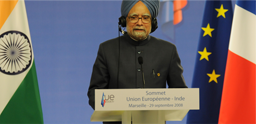
Since 2007, India and the European Union have been negotiating a comprehensive free trade agreement — officially known as Bilateral Trade and Investment Agreement (BTIA) — covering trade in goods and services besides rules pertaining to cross-border investments, competition policy, government procurement and state aid.
This legally binding agreement would cover almost a fifth of the world population and, therefore, it impact and implications (both positive and negative) would be significant. Several difficult issues need to be resolved if India is…
On 24 November 2011, the Indian government approved 51 percent foreign direct investment (FDI) in multi-brand retail stores and 100 percent in single brand outlets in its $450 billion retail market.
The decision was met with a howl of protest from allies and opposition alike. Even several sections of the ruling Congress party have also expressed their reservation against the policy announcement. The country has not witnessed such a polarized view on foreign investment policy in the last two decades.