China became a member of the World Trade Organization (WTO) on 11 December 2001. To facilitate its entry into WTO, China agreed to undertake a series of important market access commitments to open and liberalize its financial sector.
These commitments will allow foreign banks to capture markets in those regions (e.g., coastal regions and cities) where bulk of banking business is concentrated. Given the fact that foreign banks have considerable international exposure and can launch new products and services, they…
By Kavaljit Singh | Asia-Pacific Journal, Issue No.7 | December 2002
China’s massive transformation from a centrally planned economy to a market economy has received worldwide attention. There is a strong tendency among many commentators to equate China’s economic liberalization program with neoliberal Washington Consensus based on rapid privatization, deregulation and globalization policies. It would be erroneous to equate Chinese journey towards economic reforms with Washington Consensus because the country followed a sequential approach to economic liberalization rather than a blanket approach adopted by several third world countries, former Soviet…
By Kavaljit Singh | Commentary | February 20, 2002
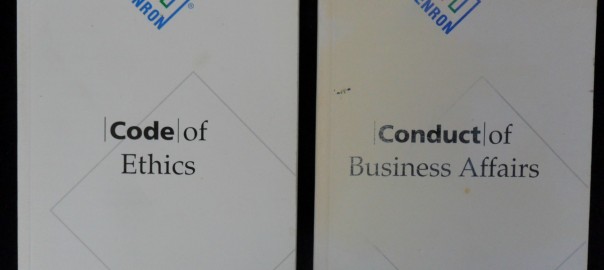
The anti-corporate activists and groups in the US and elsewhere are in a jubilant mood over the impending collapse of the Houston-based Enron Corporation, which till recently symbolized corporate-led globalization model. But it is important to emphasize here that anti-corporate activists have not engineered the collapse of Enron rather the company became victim of its own contradictions and large-scale fraudulent practices by its top management.
The collapse of Enron was almost inconceivable a few weeks ago because the company was internationally known…
By Kavaljit Singh | ASED-PIRC Briefing Paper | July 2001
In the last two decades, economic clout of global corporations has scaled unprecedented heights. Does this suggest the end of nation-states? Not at all, says the author. With the help of contemporary examples, the author argues that the role of state has been critical in shaping the present trajectory of corporate-led global economy.
This paper critically examines in detail two most controversial and complex issues related to TNCs namely, mergers and acquisitions and transfer pricing. The author calls upon anti-corporate…
By Kavaljit Singh | ASED-PIRC Briefing Paper | January 2001
Indian financial markets are among the most speculative and volatile in the world. To curb unproductive speculation and excessive volatility, the author proposes a Securities Transaction Tax (STT) of 0.25 per cent. The author argues that the wider economic and developmental gains of taxing speculative money in stock markets are more than the private gains of a handful of speculators, financiers and traders.
The paper provides legitimate grounds for imposing a STT on Indian financial markets. It underscores the point…




China’s Financial Sector under the WTO Regime: A Preliminary Assessment