By Kavaljit Singh | Commentary | November 25, 2016
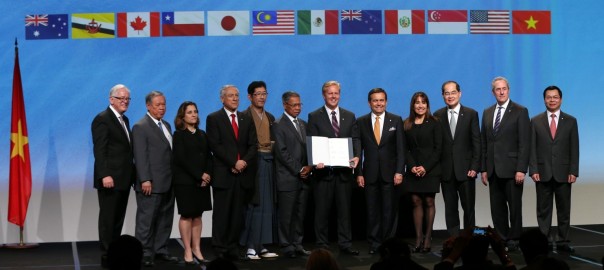
On Monday, the US President-elect Donald Trump announced that the US will pull out of the Trans-Pacific Partnership (TPP) trade pact on his first day in office (January 20). In a video message outlining his policy plans for the first 100 days in the Oval Office, Trump stated: “I am going to issue a notification of intent to withdraw from TPP, a potential disaster for our country. Instead, we will negotiate fair, bilateral trade deals that bring jobs and…
By Alfred de Zayas | Guest Blog | November 17, 2016
My 2016 report to the UN General Assembly (A/71/286) on the promotion of a democratic and equitable international order is devoted to tax evasion, tax fraud and tax havens. In this report, I recall that the Guiding Principles on Business and Human Rights do not contain any provision concerning the obligation of businesses to pay their fair share of taxes. There is no mention of tax evasion, tax fraud or tax havens. Nor is there any mention in…
We, the undersigned human rights, environmental and development organizations, urge all governments to place human rights at the core of international economic agreements, by integrating human rights protections into international investment and trade agreements and to ensure that these agreements do not impair governments’ abilities to respect, protect and fulfill their human rights obligations. Most urgently, we call on decision-makers considering entry into bilateral or multilateral trade and investment agreements to reject agreements that do not have human rights…
On the interpretation of the standard for fair and equitable treatment, India’s joint interpretative statement clarifies that the concept of FET “does not require treatment in addition to or beyond that what is required by the customary international law minimum standard of treatment of aliens, and does not create additional substantive rights.” The minimum standard of treatment of aliens is a norm of customary international law which provides a minimum set of principles for states to respect while dealing…
By Kavaljit Singh | Briefing Paper # 18 | November 2016
In a major push to widen the scope of commodity derivatives market in India, Securities and Exchange Board of India (SEBI) has recently allowed options trading on commodity exchanges. This decision has been hailed by commodity exchanges as a game changer for Indian farmers. Tracing the experience of futures trading in the Indian commodity markets, the paper argues that the options trading is not suitable for Indian farmers as they lack the understanding, resources and capacities to trade in…