By Oscar Ugarteche and Armando Negrete | Guest Blog | February 21, 2019
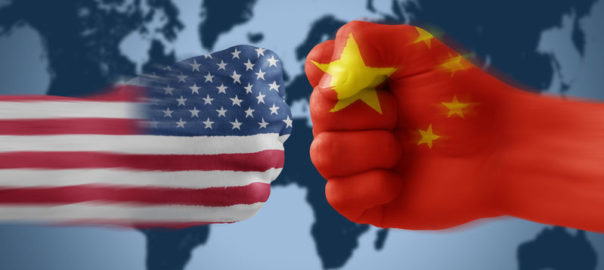
In mid-January 2018, the US president declared the trade war against China with the announcement of the tariff tax of 20% for imports of washing machines and 30% for solar panels. In March, he applied a tax on steel imports of 25% and aluminum of 10%. After that, since April, the US and China are engaged in the biggest trade war in history. With reprisals taken by China to each aggression. In December 2018, under the G20’s framework in…
By Kavaljit Singh | Policy Brief # 2 | January 10, 2019
The massive surge in capital inflows to emerging market economies (EMEs) following the 2008 global financial crisis has reignited the debate on the pros and cons of international capital mobility. While free movement of capital across borders can reduce the cost of capital, enable investments and allow investors to diversify their portfolio, it can also pose significant systemic risks in the recipient country with negative consequences for growth and development.
Large capital inflows in excess of domestic absorption capacity could…
By Kavaljit Singh | Policy Brief # 1 | January 2, 2019
Capital controls are back in fashion. In the aftermath of the 2008 global financial crisis, there is a renewed interest in capital controls as useful policy tools to prevent or mitigate financial crises. It is increasingly being acknowledged in policy circles that capital controls could insulate the domestic economy from volatile capital flows, due to the limited effectiveness of other policy measures (such as sterilization of capital flows and accumulation of foreign reserves). As many complexities are surrounding the…
More than 300 civil society groups and trade unions from 73 countries – including Madhyam – have urged governments participating in United Nations meetings in Vienna this week to completely overhaul the controversial Investor-State Dispute Settlement (ISDS) system contained within many international trade and investment agreements. Released on October 30, their public letter is addressed to member governments attending meetings of the UN Commission on International Trade Law (UNCITRAL), which provides one set of rules under which many ISDS…
By Kavaljit Singh | Letter (FT) | October 18, 2018
Nor Shamsiah Mohd Yunus, central bank governor of Malaysia, rightly warns against the deeply-rooted stigma attached to capital controls that can be helpful in pre-empting financial crises (“Malaysia backs option of capital controls”, October 17). As many emerging market economies in Asia and elsewhere are currently grappling with the challenges posed by volatile capital flows (large capital inflows followed by abrupt reversals), it is high time for the IMF to revisit its 2012 Institutional View that endorses capital controls as a…