By Kavaljit Singh | Letter (FT) | September 21, 2018
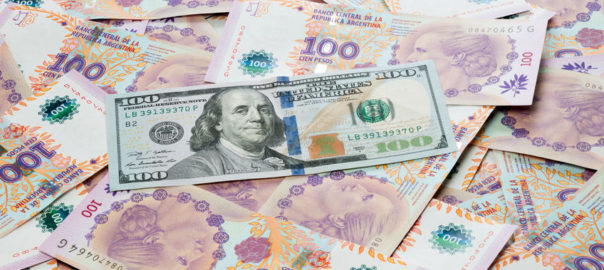
Martin Sandbu rightly warns about the diminishing role of the IMF as a crisis manager (Free Lunch, September 19). The challenges faced by the fund are much bigger than its lack of financial resources to put out fires. The current financial market turmoil in Argentina shows the IMF’s standby loan of $50bn — the largest ever credit line in IMF history — has failed to provide an effective anchor for addressing financial vulnerabilities and bolstering market confidence.
While nearly 90 members did not support discussions on investment facilitation at the WTO’s Eleventh Ministerial Conference held in Buenos Aires in December 2017, a group of 70 members decided to launch a plurilateral initiative. Broadly speaking, investment facilitation refers to measures aimed at helping investors to start, operate and exit their businesses. Aimed at removing ground-level obstacles, it seeks to enhance the investment environment by improving transparency and predictability of investment policies, streamlining administrative procedures and adopting tools to…
Japan has been in the news as the flag bearer of free trade in current times. This is particularly so after the USA under President Trump has been questioning international trade rules, be it the multilateral WTO or the regional NAFTA and the withdrawal from TPP. This, however, does not mean that the USA is withdrawing from trade liberalisation. It will pursue that through bilateral FTAs (free trade agreements). It only wants a better deal for American interests.
On June 28, 2018, the Indian rupee plunged to an all-time low of 69.10 against the US dollar amid growing concerns over tightening of global financial conditions and higher crude oil prices coupled with the worsening of domestic macroeconomic variables especially the current account balance and inflation.
The mad rush for dollar by importers and currency speculators was halted temporarily after the central bank, Reserve Bank of India, aggressively intervened in the currency markets by selling dollars in both spot…
On May 4, the Banco Central de la Republica Argentina, the country’s central bank, raised policy interest rates to a whopping 40 percent to stem the rapid depreciation of the national currency, the peso. The surprise rate increase was the third in a week after the central bank failed to halt the decline in the peso by spending $4.3 billion of foreign exchange reserves in just one week. In addition, the Argentine authorities reduced fiscal deficit target and announced…
The view expressed in this blog are those of the authors and do not necessarily reflect the views of Madhyam. Madhyam welcomes and values your contributions to this blog. For further details, please contact us (madhyamblog@gmail.com).
We encourage you to communicate freely and openly about the themes covered in the blog.
You agree not to post any material that you do not have the right to post, for example, under intellectual property, confidentiality, privacy or other applicable laws.
You agree that your posted contributions will be licensed under the Creative Commons license applicable to comments where you post your material.
All comments will be moderated and published at the sole discretion of the Madhyam editorial team.
Madhyam reserves the right to delete, modify, refuse to post or remove (without notice or explanation) any Content, in whole or part, and to block any Contributor for any reason, at its sole discretion.
Madhyam also reserves the right to take any other action as may be appropriate in the circumstances.