By Kavaljit Singh | Op-Ed, Financial Times | July 7, 2003
If the European Union, Japan and Canada have their way, negotiations for a multilateral investment agreement will begin at the World Trade Organisation meeting in Cancun in September. But many developing countries are doing everything they can to ensure they do not. They are right to do so: an MIA has the potential to cause them serious economic damage.
There is no conclusive evidence that investment agreements lead to increased foreign investment. Since the 1980s, developing countries have signed numerous bilateral investment agreements, yet they receive less than…
By Kavaljit Singh | Commentary | September 20, 2011
In its latest attempts to dilute the divestment conditions, Coke has sought permission from the Indian authorities to deny voting rights to the Indian shareholders. The proposal of offering voting rights to Indian shareholders is “substantive and onerous,” says the company. In a letter (dated January 23, 2003) addressed to the Foreign Investment Promotion Board (FIPB), Coke has sought deletion of the condition under which its bottling subsidiary, Hindustan Coca-Cola Beverages Private Limited (HCCBPL), is bound to provide 49…
The sinister move by the US to curb the use of capital controls under the guise of just concluded bilateral trade agreements with Chile and Singapore has not received adequate attention. America’s economic predominance – and the resulting shape of the global economy – has long rested on a combination of bullying, threats and inducements, but recent US bilateral trade deals signed with Chile and Singapore hint at something entirely more sinister. This is because both agreements include strict financial conditions alongside aggressive safeguards for intellectual property which go beyond multilateral benchmarks…
By Kavaljit Singh | Op-Ed, Times of India | January 30, 2003
Historically, women’s groups and NGOs initiated microcredit programmes at local levels as one component of the development strategy to empower poor women. But nowadays microcredit is no longer a localised activity. For banks and financial institutions, microcredit offers new avenues of profit-making since interest rates range from 20 to 40 per cent and repayment rates are over 90 per cent, far above commercial lending. This economic logic makes the poor more attractive to banks and financial institutions, but not vice-versa. Even agricultural and consumer goods companies have jumped onto the microcredit…
By Kavaljit Singh | Commentary | February 20, 2002
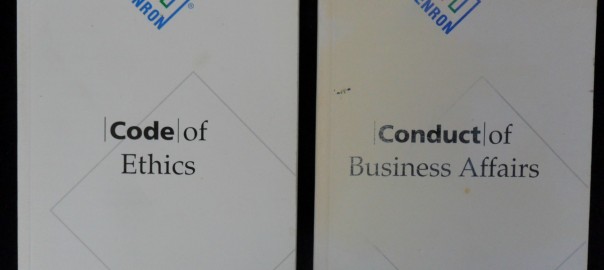
The anti-corporate activists and groups in the US and elsewhere are in a jubilant mood over the impending collapse of the Houston-based Enron Corporation, which till recently symbolized corporate-led globalization model. But it is important to emphasize here that anti-corporate activists have not engineered the collapse of Enron rather the company became victim of its own contradictions and large-scale fraudulent practices by its top management.
The collapse of Enron was almost inconceivable a few weeks ago because the company was internationally known…
The view expressed in this blog are those of the authors and do not necessarily reflect the views of Madhyam. Madhyam welcomes and values your contributions to this blog. For further details, please contact us (madhyamblog@gmail.com).
We encourage you to communicate freely and openly about the themes covered in the blog.
You agree not to post any material that you do not have the right to post, for example, under intellectual property, confidentiality, privacy or other applicable laws.
You agree that your posted contributions will be licensed under the Creative Commons license applicable to comments where you post your material.
All comments will be moderated and published at the sole discretion of the Madhyam editorial team.
Madhyam reserves the right to delete, modify, refuse to post or remove (without notice or explanation) any Content, in whole or part, and to block any Contributor for any reason, at its sole discretion.
Madhyam also reserves the right to take any other action as may be appropriate in the circumstances.