By Kavaljit Singh | Op-Ed, The Hindu | February 9, 2012
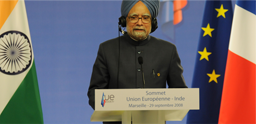
Since 2007, India and the European Union have been negotiating a comprehensive free trade agreement — officially known as Bilateral Trade and Investment Agreement (BTIA) — covering trade in goods and services besides rules pertaining to cross-border investments, competition policy, government procurement and state aid.
This legally binding agreement would cover almost a fifth of the world population and, therefore, it impact and implications (both positive and negative) would be significant. Several difficult issues need to be resolved if India is…
On 24 November 2011, the Indian government approved 51 percent foreign direct investment (FDI) in multi-brand retail stores and 100 percent in single brand outlets in its $450 billion retail market.
The decision was met with a howl of protest from allies and opposition alike. Even several sections of the ruling Congress party have also expressed their reservation against the policy announcement. The country has not witnessed such a polarized view on foreign investment policy in the last two decades.
After months of delay, the US commodity regulator – Commodity Futures Trading Commission (CFTC) – finally approved new rules to limit traders’ positions on 28 physical commodity futures (and swaps) contracts. On 18 October 2011, the CFTC’s decision was arrived through a 3-2 vote along party lines, with the commission’s three Democrats forming the majority against the two Republicans. The new restrictions (called position limits) on the number of contracts traders can hold are an important component of the…
The G20 finance ministers and central bankers have put off an immediate decision to weigh up a global financial transaction tax (FTT) proposal at the forthcoming G20 Summit (Cannes, 3-4 November 2011).
The two-day Ministerial Meeting in Paris took place against the backdrop of huge protests in US and Europe, galvanized by the Occupy Wall Street movement. At the Paris meeting, G20 finance ministers discussed myriad policy and implementation issues concerning world economy and financial markets. As anticipated, eurozone sovereign debt crisis…
By Kavaljit Singh | Commentary | September 20, 2011
Under the proposed India-EU free trade agreement, the European Commission (EC) has sought an expansive mandate to negotiate on investment issues on the behalf of the European Union. On January 20, 2011, the EC officially made recommendations to the European Council seeking modifications in the negotiating directives for the trade agreement with India. If these recommendations are accepted, the EC would pursue comprehensive cross-border investment liberalization and protection provisions under the proposed free trade agreement with India. The EC…
The view expressed in this blog are those of the authors and do not necessarily reflect the views of Madhyam. Madhyam welcomes and values your contributions to this blog. For further details, please contact us (madhyamblog@gmail.com).
We encourage you to communicate freely and openly about the themes covered in the blog.
You agree not to post any material that you do not have the right to post, for example, under intellectual property, confidentiality, privacy or other applicable laws.
You agree that your posted contributions will be licensed under the Creative Commons license applicable to comments where you post your material.
All comments will be moderated and published at the sole discretion of the Madhyam editorial team.
Madhyam reserves the right to delete, modify, refuse to post or remove (without notice or explanation) any Content, in whole or part, and to block any Contributor for any reason, at its sole discretion.
Madhyam also reserves the right to take any other action as may be appropriate in the circumstances.