The TPP is Dead. What Happens Next?

By Kavaljit Singh | Commentary | November 25, 2016

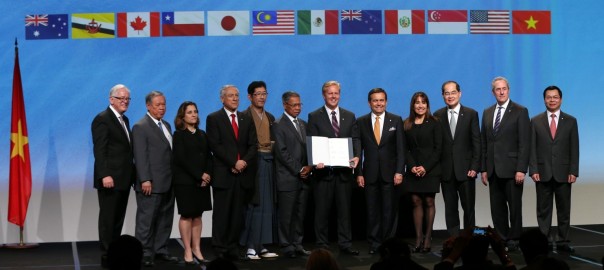
On Monday, the US President-elect Donald Trump announced that the US will pull out of the Trans-Pacific Partnership (TPP) trade pact on his first day in office (January 20). In a video message outlining his policy plans for the first 100 days in the Oval Office, Trump stated: “I am going to issue a notification of intent to withdraw from TPP, a potential disaster for our country. Instead, we will negotiate fair, bilateral trade deals that bring jobs and industry back on to American shores.”

The Obama administration was trying hard to seek US congressional ratification this year but it abandoned efforts after the victory…

Read More |

Integrating Human Rights into International Investment Agreements

By CSOs | Joint Statement | November 14, 2016

We, the undersigned human rights, environmental and development organizations, urge all governments to place human rights at the core of international economic agreements, by integrating human rights protections into international investment and trade agreements and to ensure that these agreements do not impair governments’ abilities to respect, protect and fulfill their human rights obligations.  Most urgently, we call on decision-makers considering entry into bilateral or multilateral trade and investment agreements to reject agreements that do not have human rights at their centre.

International investment can be a powerful engine for economic development and, potentially, to help fulfill a wide range of economic and social rights. …

Read More |

Remodeling India’s Investment Treaty Regime (III)

By Kavaljit Singh | Commentary | November 9, 2016

On the interpretation of the standard for fair and equitable treatment, India’s joint interpretative statement clarifies that the concept of FET “does not require treatment in addition to or beyond that what is required by the customary international law minimum standard of treatment of aliens, and does not create additional substantive rights.” The minimum standard of treatment of aliens is a norm of customary international law which provides a minimum set of principles for states to respect while dealing with foreign nationals and their property.

The JIS points out that a measure shall constitute a violation through customary international law minimum standard of treatment only…

Read More |

CSOs say No to ‘TRIPS Plus’ Measures in RCEP

By CSOs | Open Letter | October 18, 2016

Following is the text of an open letter submitted by nearly 100 health, community and development organisations in the Asia Pacific region to the sixteen governments which are currently negotiating the Regional Comprehensive Economic Partnership (RCEP) agreement – a mega regional free trade agreement. The open letter urges governments to reject all provisions that would negatively affect access to generic medicines in the proposed pact.

The Regional Comprehensive Economic Partnership (RCEP) is a free trade agreement (FTA) currently under negotiation between the ten member states of the Association of Southeast Asian Nations (ASEAN) (Brunei, Burma (Myanmar), Cambodia, Indonesia, Laos, Malaysia, the Philippines, Singapore, Thailand, Vietnam) and…

Read More |

India Changes Tack on RCEP Negotiations

By Kavaljit Singh | Commentary | August 13, 2016

Last week, India abruptly changed tack by expressing its willingness to drop three-tiered approach on tariff liberalization under the proposed Regional Comprehensive Economic Partnership (RCEP) agreement. This was communicated to trading partners at the fourth RCEP Ministerial Meeting held in Laos on August 5. India has been one of the key proponents of the three-tiered approach on tariff reduction under RCEP.

What led India to change tack? The precise reasons behind this policy shift are not yet publicly known but media reports suggest that India has made this offer conditional on getting higher levels of commitments on trade in services and investment from other…

Read More |