By Kavaljit Singh | ASED-PIRC Briefing Paper | July 2001
In the last two decades, economic clout of global corporations has scaled unprecedented heights. Does this suggest the end of nation-states? Not at all, says the author. With the help of contemporary examples, the author argues that the role of state has been critical in shaping the present trajectory of corporate-led global economy.
This paper critically examines in detail two most controversial and complex issues related to TNCs namely, mergers and acquisitions and transfer pricing. The author calls upon anti-corporate…
By Kavaljit Singh | ASED-PIRC Briefing Paper | January 2001
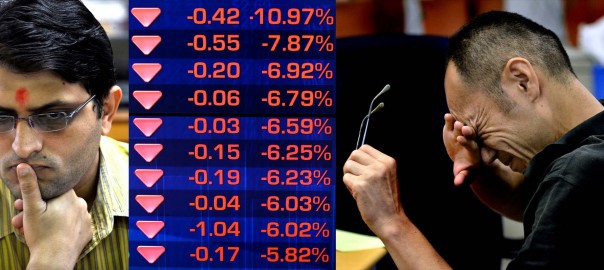
Indian financial markets are among the most speculative and volatile in the world. To curb unproductive speculation and excessive volatility, the author proposes a Securities Transaction Tax (STT) of 0.25 per cent. The author argues that the wider economic and developmental gains of taxing speculative money in stock markets are more than the private gains of a handful of speculators, financiers and traders.
The paper provides legitimate grounds for imposing a STT on Indian financial markets. It underscores the point…
The view expressed in this blog are those of the authors and do not necessarily reflect the views of Madhyam. Madhyam welcomes and values your contributions to this blog. For further details, please contact us (madhyamblog@gmail.com).
We encourage you to communicate freely and openly about the themes covered in the blog.
You agree not to post any material that you do not have the right to post, for example, under intellectual property, confidentiality, privacy or other applicable laws.
You agree that your posted contributions will be licensed under the Creative Commons license applicable to comments where you post your material.
All comments will be moderated and published at the sole discretion of the Madhyam editorial team.
Madhyam reserves the right to delete, modify, refuse to post or remove (without notice or explanation) any Content, in whole or part, and to block any Contributor for any reason, at its sole discretion.
Madhyam also reserves the right to take any other action as may be appropriate in the circumstances.