
Assessing Key Outcomes of the 18th BRICS Summit on Global Trade and Agriculture
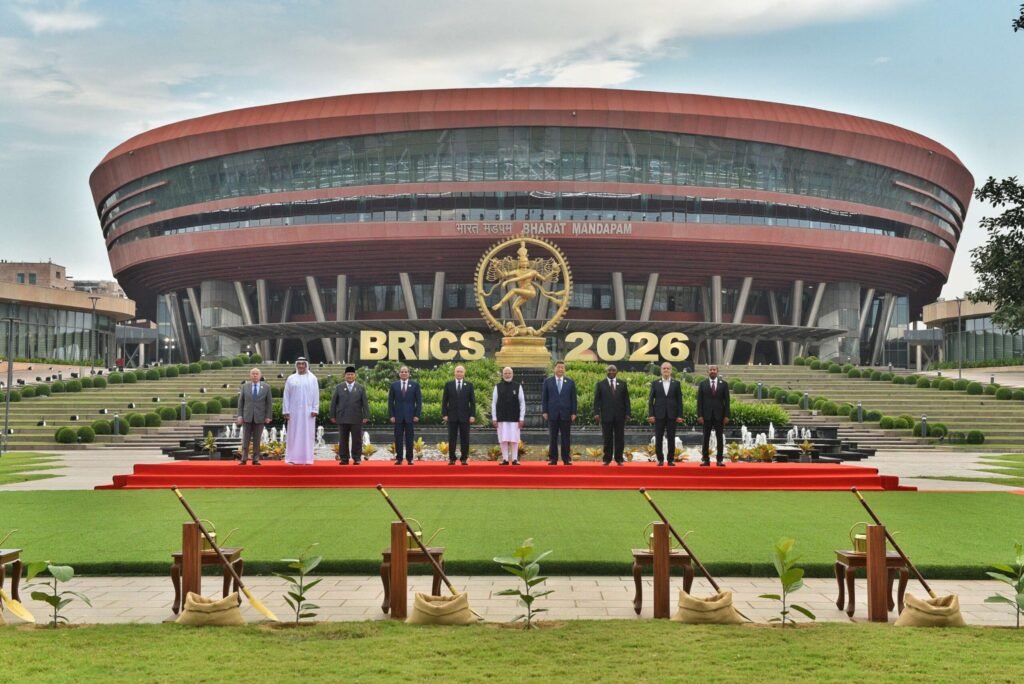
Two decades after the Foreign Ministers of Brazil, Russia, India, and China met on the sidelines of the United Nations General Assembly, signalling the formation of the first grouping of emerging economies, the 11-member grouping, which now represents these countries, seems to be carving out an economic agenda that challenges the dominance of the North. At least some signs in this regard have emerged in the New Delhi Declaration adopted at the end of the 18th Summit. In two areas, the decisions taken in the New Delhi Summit hold promise. First, resetting the global trade agenda by placing multilateralism at the centre stage. If these decisions are systematically developed with the full engagement of not just the BRICS members but also the 10 associate members, they could well provide the framework for the post-Trump reset of the trade agenda. The “America First” trade agenda needs a “South First” perspective that can be the real driver of equitable trade and, therefore, of balanced and sustainable economic development.
Agriculture was another area that received significant attention at the 18th BRICS Summit. The leaders prioritised issues that are vital for ensuring food and nutritional security and agreed to take collaborative initiatives. Particularly significant was their emphasis on the special place of agrobiodiversity and farmers’ rights in agricultural systems. Protecting the rights of traditional farmers over their knowledge and seeds, as well as safeguarding biodiversity in general and agrobiodiversity in particular, are both critical to improving the sustainability of agriculture.
At the Kazan Summit in 2024, the BRICS members agreed to work on a BRICS Grain Exchange, a grain trading platform that could enable them to reduce and eventually eliminate their dependence on global agribusiness. This institution could benefit both exporters and importers of agricultural commodities through better and more stable price realisation for exporters and more favourable terms for importers, including stability of supplies.
This paper discusses the details of these two sets of decisions taken at the 18th BRICS Summit and their significance not only for the 11-member grouping but also for the developing world.
I. The Global Trade Agenda
The trade agenda of the BRICS countries in the New Delhi Declaration was their collective response to President Donald Trump’s “America First” trade policy, which upended the 8-decade-old rules-based multilateral trading system. The leaders of the grouping expressed serious concerns about the rise of unilateral tariffs and non-tariff measures that are inconsistent with WTO rules. They argued that the proliferation of these trade-restrictive actions, whether in the form of unilateral imposition of tariffs and/or non-tariff measures, or protectionism in the guise of addressing environmental problems, were inconsistent with multilaterally agreed trade rules. Unilateralism threatens to reduce global trade, disrupt global supply chains, and potentially exacerbate existing economic disparities between nations and adversely affect prospects for global development.
The BRICS members agreed to restore the relevance of the WTO and enhance the responsiveness of the institution to trade disruptions, in keeping with the needs and priorities of emerging markets and developing economies. Further, they agreed to advance discussions in the WTO on outstanding issues, including agriculture, while supporting balanced, inclusive, and concrete outcomes for the strengthening of the multilateral trading system to enable it to deal with emerging global challenges more efficiently. The grouping demanded the immediate restoration of an accessible, effective, fully functioning, two-tier binding WTO dispute settlement mechanism (DSM) through the appointment of Appellate Body members at the earliest, since a well-functioning DSM was vital for ensuring the enforcement of multilateral trade rules.
The BRICS countries were unanimous in their support for reforming the WTO and strengthening the organisation’s non-discriminatory, open, equitable, transparent, fair, inclusive, and predictable rules, while buttressing its core principles, especially the Most-Favoured-Nation Treatment and Special and Differential Treatment for developing members, particularly LDCs. The reform of the WTO is a long-pending issue, which the developing countries initiated immediately after the formation of the organisation in 1995. Their efforts and the leadership provided by the three founding members of the WTO, namely Brazil, India, and South Africa, culminated in the adoption of the Doha Development Agenda (DDA) in 2001. The DDA proposed comprehensive reforms of all covered agreements of the WTO by reducing the inequities that the developing countries had complained about.
In the new phase of WTO reforms, initiated after the DDA was de facto discontinued in 2017, BRICS membership has been divided in their support of issues that should figure in the reform agenda. The post-DDA reform deliberations have seen the strengthening of plurilateral negotiations on the so-called “new issues,” namely, e-commerce[1], domestic regulation in services[2], and investment facilitation[3]. The negotiations were initiated through joint statements issued by a set of “like-minded countries”, hence their label, Joint Statement Initiatives (JSIs). Of the existing 11 BRICS members, 7 have joined at least one JSI, and China and the UAE are members of all JSIs. However, Ethiopia, India, and South Africa have remained outside the JSIs, the latter two having consistently questioned the legitimacy of the JSIs.
Negotiations on these JSIs have concluded, and agreements have been reached among the participants; however, because of the absence of “consensus” among WTO members to include these issues, these agreements have not been recognised as plurilateral agreements and, therefore, remain excluded from Annex 4 of the Marrakesh Agreement.
The contradiction between JSIs and the institutional structure of the WTO, as provided in the Marrakesh Agreement Establishing the WTO ( 1994), was highlighted in a submission by India and South Africa (Namibia was also a co-sponsor).[4] According to these countries, Article IX.1 of the Marrakesh Agreement states that the WTO must follow the practice of decision-making by consensus, and if a decision cannot be reached by consensus, there shall be voting to break the deadlock.[5] The decision on JSIs did not follow these laid-down procedures; groups of countries launched the negotiations without the concurrence of the General Council or the Ministerial Conference, where the entire WTO membership is present. Further, Article III.2 of this Agreement states that the “WTO shall provide the forum for negotiations among its members concerning their multilateral trade relations”, a requirement that the plurilateral negotiations triggered by the JSIs did not fulfil.
Disagreements on whether consensus-based decision-making among WTO members should continue to be adhered to or sacrificed in favour of the JSIs have created deep divisions among WTO members, and on this count, the BRICS also find themselves divided. The New Delhi Declaration demonstrated this divergence of views among the BRICS members. While the Declaration mentioned that it was important to identify appropriate pathways for plurilateral initiatives into the WTO legal framework, it also spoke of restoring the credibility of the multilateral trading system, which, as mentioned earlier, draws its sustenance from its existing legal foundations that are anchored on consensus among the entire WTO membership in the decision-making process. This hiatus between the BRICS members on the critical issue of how decisions should be taken in the WTO needs immediate attention from the leaders of the grouping. This is more pertinent in view of the leaders’ statement at the end of their 18th Summit, wherein they strongly affirmed that the “BRICS countries will continue playing a pivotal role in voicing the concerns and priorities of the Global South, as well as promoting a more just, sustainable, inclusive, representative, and stable international order based on international law”. For the BRICS to assume the responsibility on behalf of the Global South in the WTO, its member states must ensure that decision-making in the organisation takes place in an inclusive manner, representing the true spirit of multilateralism. They need to recognise that the plurilateral approach is a sanction for imposing the will of a few economically powerful countries on smaller countries, which is antithetical to multilateralism.
Resolving their inter se differences on how the WTO should be governed is vitally important for the BRICS countries to develop a common agenda for reforming the WTO. This is a fundamental requirement for restoring confidence in the rules-based multilateral trading system, which functions on the principles of transparency and inclusivity.
II. BRICS Agenda on Agriculture
In the New Delhi Declaration of the 18th BRICS Summit, the leaders of this increasingly influential grouping underlined several critical initiatives for enhancing inter se cooperation in agriculture, which could redefine the dynamics of food and nutrition security and improve the sustainability of agriculture in countries of the Global South.
Initiatives towards improving the sustainability of agriculture that BRICS took with India as the Chair include the establishment of a collaborative, non-binding, and farmer-centric BRICS AGRIN (Agro-Inputs, Genetic Resources, and Information Network), and the launch of a Global Forum on Farmers’ Rights in Seed Systems. The BRICS AGRIN should bring the much-needed focus on agrobiodiversity, a critical but often neglected element to ensure sustainable food systems. Four of the five original BRICS members and a few associate members of the grouping are mega-diverse countries, which are rich in biological diversity (holding at least 60-70% of the world’s biodiversity) and associated traditional knowledge. As irregular weather patterns caused by global warming have increasingly impacted agriculture, there has been a greater recognition of the importance of enhancing agrobiodiversity to improve crop resilience. It is now well established that diverse agricultural systems, including the conservation and sustainable use of indigenous crop varieties, are essential for reducing weather-induced food losses[6]. However, to protect and promote agrobiodiversity, it is imperative to protect the knowledge and practices of traditional farmers in the developing world through the assignment of farmers’ rights. The FAO’s International Treaty for Plant Genetic Resources for Food and Agriculture, ratified in 2004, formally recognised farmers’ rights at the international level, while India enacted the Protection of Plant Varieties and Farmers’ Rights Act (PPV&FRA) in 2001.
Two and a half decades after the enactment of the PPV&FRA, BRICS proposed the Global Forum on Farmers’ Rights in New Delhi. If nurtured effectively, the Global Forum could play a determining role in empowering traditional farmers by supporting farmer-centric seed and knowledge systems.
The progress made under India’s Chairmanship towards establishing a grain trading platform within BRICS, namely, the BRICS Grain Exchange, is of considerable consequence for the BRICS members and the countries of the South. During its Presidency in 2024, Russia had proposed this grain trading platform as a unified digital trading platform where producers and buyers of agricultural commodities could deal directly without external intermediaries. The platform is expected to reflect the actual balance of supply and demand within BRICS, enabling the member countries to secure control over their commodity trade. Besides strengthening intra-BRICS trade, this institution would significantly reduce their reliance on existing commodity exchanges over which global agribusiness has complete control. The control of these companies over global grain trade is estimated at 70–80% of globally traded commercial grains and oilseeds, according to recent reports[7]. In addition, the US and the EU host the largest globally integrated commodity exchanges, such as the CME Group and Intercontinental Exchange (ICE) in the US and Euronext in the EU. These exchanges offer a variety of derivatives to help market participants manage risk.
The reduction and eventual elimination of intermediaries resulting from a well-functioning BRICS Grain Exchange would benefit both producing and consuming countries. With rent-seeking middlemen out of the way, producer countries can hope to realise better prices for their produce, while buyers should pay less through direct settlements. While proposing its establishment, Russia had argued that the BRICS Grain Exchange is an opportunity for member countries of the grouping “to determine the fair value of their products themselves.” Nearly eight decades ago, Raul Prebisch and Hans Singer showed that the dependence of the commodity-producing countries of the South on a trading system dominated by the North and their corporations was the cause of the impoverishment of the former set of countries. The South has suffered long-term secular decline and volatility in commodity prices for considerably long periods, resulting in a decline in their terms of trade. These countries were deprived of foreign exchange earnings vital for meeting their development aspirations and were forced to depend on foreign capital inflows, trapping them in dependent relationships with the North. Studies have shown that if commodity terms of trade had not declined, the South would not have had to suffer crippling indebtedness and could have pursued their independent pathway to develop their economies[8].
In the New Delhi Declaration, the BRICS leaders emphasised “the importance of … mitigating the impacts of acute food price volatility …,” objectives that can be realised through an effectively functioning BRICS Grain Exchange. They also underlined the need to avoid “abrupt supply crises,’ which is essential for “ensuring food security and nutrition.” Two important decisions were made at the end of the 18th Summit towards operationalising the BRICS Grain Exchange. First, on the modalities of its functioning, and second, to consider extending the remit of this institution to other agricultural products (beyond grains) and non-agricultural commodities, which could significantly improve its viability. The BRICS Grain Exchange could also benefit from the decision of the leaders to hold discussions on facilitating intra-BRICS trade of agricultural products and agricultural and food production inputs, including by promoting resilient and non-discriminatory supply chains, and improving value chains and sustainable agricultural practices.
The setting up of this institution is fully justified on two counts. First, BRICS members have significant stakes in the production, consumption, and distribution of grains, which have grown since the beginning of the decade. The latest figures from the US Department of Agriculture show that the 11-country grouping could account for almost 47% of global production of grains during the current agricultural year, 2026/27, up from 44% in 2021/22. Large increases in corn production in Brazil and China, rice production in India, and wheat production in Russia, despite its war with Ukraine, provided the impetus for production growth. These countries are equally large consumers of grains, with an estimated share of about 47% of global consumption in 2026-27. With several large exporters and importers of grains in their mix, the BRICS’ share in global exports and imports has varied between 25-30% during the present decade. It was, therefore, imperative that this grouping took up the challenge of managing the distribution of their grains instead of allowing intermediaries to do so, a step they should have taken much earlier given the overwhelming dominance of the large agribusiness, the ABCD+ (Archer Daniels Midland, Bunge Global SA, Cargill and Louis Dreyfus Company and COFCO). This was imperative as ABCE+ are involved in all phases of production and trade, including storage to processing, provisioning of inputs, marketing, financing and investment, and risk management. As mentioned earlier, these companies have a complete stranglehold over global grain trade, at 70-80% of globally traded commercial grains and oilseeds[9].
An International Panel of Experts on Food Systems commented in their report in 2022 that with “commodity speculation mounting, [grain traders] have a clear incentive to hold stocks back until prices are perceived to have peaked.” The grain traders have given themselves this “incentive” for engaging in speculative activities through their large storage facilities, using which they exercise almost absolute control over the market. In 2025, the combined storage capacities reported by only two publicly held companies, Archer Daniels Midland[10] and Bunge[11] (in their regulatory disclosures in the US), were larger than the total wheat consumption of five BRICS countries, Brazil, Egypt, Ethiopia, Indonesia, and Iran, an indication of the leverage these companies can exercise over the agricultural markets when supply conditions are tight. The other major agribusiness companies are not required to make such mandatory disclosure of their storage capacities, as they are privately held. More importantly, grain traders do not have any obligation to disclose their inventory at any given point, so that even during a global food crisis, these companies can stockpile and hold back food supplies, waiting for prices to go even higher.
In recent years, the speculative instincts of grain traders have been fuelled further through their increasing financialisation, which, according to the UNCTAD, began after the global financial crisis in 2008[12]. Grain traders have expanded their operations, encompassing a plethora of financial activities, including trading, investments, and securitisation, and have, in practice, transformed themselves into non-bank financial institutions (NBFIs), or shadow banks, which make up a growing share of the global financial system. Traditionally, commodity trading was characterised as a “high-volume, “thin margin” business, anchored on relatively transparent “cost-plus” pricing tied to spot market prices. However, the nature of this business has undergone a metamorphosis over the past two decades, with traders’ incomes overwhelmingly dependent on gains from derivatives.
Despite assuming the character of NBFIs, the gain companies escaped the regulatory scrutiny that financial institutions were subjected to, especially after the new norms were introduced post-2008 crisis. New regulations introduced after 2017 uncovered the opacity surrounding their operations, revealing the true nature of the earnings of the grain trading companies from financial intermediation. Data show that since 2018, income from financial intermediation has consistently accounted for 74% to 76% of the revenues of the larger companies, with some companies recording more than 90% of their income from financial intermediation.
Global agribusiness can mask its profit-making abilities further by maintaining complex corporate structures and the secrecy of its operations. UNCTAD reports that, as of December 2024, ABCD+ operated through a network of almost 3500 subsidiaries, and that their excessive market speculation appears to take place at the level of subsidiaries (the parent firm is not required to report the activity). The grain traders’ control over the markets is significantly more than previously understood.
The decision to establish the BRICS’ grains trading platform could not have been timelier given that it was taken at a time when increasing consolidation in the global agribusiness and their growing financialisation are threatening global food security and jeopardising the lives and livelihoods of small farmers in developing countries. Although this institution would promote intra-BRICS trade and be a significant step towards the use of local currencies for trade settlement, the member countries of the grouping would have to coordinate their efforts to work out the critical operational details without delay. De-dollarisation has been the avowed objective of the BRICS countries for several years, but the lack of progress has been a major concern. The leaders of the grouping need to set timelines for identifying the factors that have stymied progress towards reducing dependence on the US dollar and find politically acceptable solutions.
III. Concluding Remarks
Over the past 18 Summits, the BRICS members have consistently articulated their determination to overcome inequities in the global economic order, including through the establishment of their own institutions that would allow them to function independently. Of the institutions they have established, the New Development Bank has operated successfully, although it needs to be scaled up to enable it to make a significant impact on the global development finance landscape.
At the New Delhi Summit, the BRICS countries took steps to strengthen their grain trading platform, the BRICS Grain Exchange, which Russia had proposed in 2024. This institution could significantly impact BRICS members’ engagement in agricultural trading, as it has the potential to reduce their dependence on dominant global agribusiness. The grain trading platform could also provide impetus for strengthening intra-BRICS trade by pursuing local currency trade and using alternative payment mechanisms.
The global trading system is in disrepair, and the BRICS members, which collectively account for a quarter of trade flows, need to play a constructive role in restoring order. In the New Delhi Declaration, the BRICS members agreed to coordinate their efforts to ensure that the multilateral trading system functions effectively. While this is an important step, the grouping must address the divergences in the positions of the member countries on several critical issues, especially the decision-making process of the WTO. This is vitally important to ensure that the organisation hears the voice of all its members before taking decisions, which it is required to do but has abandoned over the past decade.
Notes and References
[1] WTO. 2017 Joint Statement on Electronic Commerce, Ministerial Conference, Eleventh Session. WT/MIN(17)/60. 13 December
[2] WTO. 2017. Joint Statement on Services Domestic Regulations, Ministerial Conference, Eleventh Session. WT/MIN(17)/61. 13 December.
[3] WTO. 2017. Joint Statement on Investment Facilitation for Development, Ministerial Conference, Eleventh Session, WT/MIN(17)/59. 13 December.
[4] WTO. 2021. The Legal Status of ‘Joint Statement Initiatives’ and their Negotiated Outcomes: Revision. WT/GC/W/819R. 30 April
[5] Marrakesh Agreement Establishing the World Trade Organization, Apr. 15, 1994, 1867 U.N.T.S. 154, Article IX.1.
[6] Promoting Synergies in Addressing Biodiversity and Climate Change Adaptation Issues: Linking National Adaptation Plans and National Biodiversity Strategies and Action Plans. Conference of the Parties to the Convention on Biological Diversity, Twelfth meeting. UNEP/CBD/COP/12/INF/29. 29 September 2014.
[7] ETC Group. 2026. Grain Traders, Greed and Oligopoly Power. Communiqué number: 120.
[8] UNCTAD. 2004. Economic Development in Africa: Trade Performance and Commodity Dependence. United Nations.
[9] ETC Group. 2026. Grain Traders, Greed and Oligopoly Power. Communiqué number: 120.
[10] Archer-Daniels-Midland Company: Form 10-K for the Year ended December 31, 2025, accessed from: https://www.sec.gov/Archives/edgar/data/7084/000000708426000011/adm-20251231.htm.
[11] Bunge Global SA: Form 10-K – Annual report for year ending December 31, 2025, accessed from: https://www.sec.gov/ix?doc=/Archives/edgar/data/0001996862/000162828026009842/bg-20251231.htm
[12] UNCTAD. 2025. On the Brink: Trade, finance and the reshaping of the global economy. 2025 Trade and Development Report. United Nations.
Biswajit Dhar is a development economist and former professor at Jawaharlal Nehru University, New Delhi.
Image courtesy of www.brics2026.gov.in